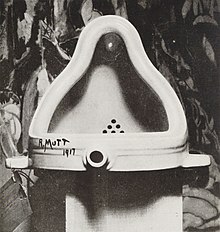
This unusual movement began in the 1960s and impacted art in all forms. Marcel Duchamp, a French artist, paved the way for other conceptual painters and photographers by providing examples and new ideas of already made objects and combining them together. Duchamp's most famous piece "The Fountain" (1917), was a standard urinal-basin that he tried to make reflect a type of fountain. Later on in 1969, Joseph Kosuth acknowledged in his essay Duchamp's relevance and theoretical importance of future conceptual artists:
Art after Philosophy - J. Kosuth
"All art (after Duchamp) is conceptual (in nature) because art only exists conceptually".
All artists in this movement meshed together everyday objects to create new ones, even if the new item did not exist in reality. The concepts behind each idea all emphasized Duchamp's values and reduced the material presence within their works. Some other conceptual pieces include:

Concept Art Video

Questions:
1) Who is the artist that started this unusual movement and how did his ideas change the way people created their artwork?
Marcel Duchamp is the artist who paved the way for all concept artist. His visions of mixing everyday objects impacted the ways in which people began to create their pictures, whether it was photographs or paintings.
2) What was Joseph Kosuth's essay called that he based off of Duchamp's ideas?
a- Philosophy before Art
b- Unique Art
c- Art and Philosophy
d- Art after Philosophy
"Conceptual Art Movement, Artists and Major Works." The Art Story. N.p., n.d. Web. 21 Feb. 2016. <http://www.theartstory.org/movement-conceptual-art.htm>.
"Conceptual Art." Wikipedia. Wikimedia Foundation, n.d. Web. 21 Feb. 2016. <https://en.wikipedia.org/wiki/Conceptual_art>.

No comments:
Post a Comment