 This is a beautiful photo of a sunrise my cousin took one morning. It is very calming to me and it is beautiful. The clouds remind me of cotton candy because of how soft they look and the colours that are shown through them. This photo is just speechless to me and I wish I was there to witness this beautiful sunrise. This art piece is considered a photograph. Photography is an art movement that began in between the 19th and 20th century.
Monday, 29 February 2016
Cotton Candy Clouds
This is a beautiful photo of a sunrise my cousin took one morning. It is very calming to me and it is beautiful. The clouds remind me of cotton candy because of how soft they look and the colours that are shown through them. This photo is just speechless to me and I wish I was there to witness this beautiful sunrise. This art piece is considered a photograph. Photography is an art movement that began in between the 19th and 20th century.

MiNd GaMeS

Illusions, this usually causes your eyes to play games tricking you to see things weirdly. This is considered an art movement in time called, "Op Art". Op Art began in the 1960s and a father of this art is Victor Vasarely. I drew my own vision of op art but it may not be as illusional as all the other famous art works. I used a ruler and broke up my square into 4 triangles then drew lines within. I then coloured every other line black to create an illusion effect!
A Bright Future!

Futurism is a movement that originated in Italy in the early 20th century. It emphasized speed, technology, youth, and violence, and objects such as the car, the aeroplane, and the industrial city. My drawing was to help illustrate a bright future of how our highways will be up high like our buildings making it easier for people to transport to different places. I used bright colours in hopes to show how our future is bright as long as we make it that way. It is our choice to decide how our future may turn out.

My inspiration was this photo and I really liked the road idea so I used that to illustrate my own drawing.
Sunday, 28 February 2016
Splash

A painted this colourful dotted painting but dotting my paper with different colour of dots. Splash into the world and realize that our world is full of different colours we only need to open our eyes to see the true beauty this world of colours has to offer. Colour field is an art movement that was created during the 1940s and the 1950s.
Beauty Hurts
 This is one of my favourite paints that I have created. I used acrylic paint and pencil crayon for her skin. This took me quite some time to complete but I believe that I have done a really good job. This image is of a girl who i crying. Her tears can be interrupted in many different ways; tears of joy, sadness, guilt, or anger. However, to me her tears are that no matter how hard she may try, she will never be good enough.
This is related to society today as most girls struggle with beauty and trying to make themselves look like the girls on the cover of magazines and how they don't look like that. Everyone is created unique and everyone is beautiful, you don't need to look like the girls to the magazines to be that.

This art movement is Pop Art and it was created during the mid and late 1950s. One of the famous artists during this time was Eduardo Paolozzi.
I was inspired to paint this by a similar photo however I changed a few colours to make it my own in a way.
Tree of Love
 I painted this picture and thought of a meaning behind such a simple painting. LOVE. The branches of this tree end up holding a heart. We need to feel love and to love others for our hearts to grow in love. Our hearts are like trees, without water it isn't able to grow and will die. This art was created using acrylic paint and i would dab my paint brush to give it a certain effect.
 The art movement related to this painting is
"Expressionism", originating in Germany at the beginning of the 20th century.

My inspiration that I had copied, was this photo.
Shape Life
 Different shapes and different colours are used to produce this artwork. This artwork shows that their are may ways to go with life, and different shapes that can shape our lives to make us the people we grow to be. I had cut and pasted these shapes to create my own artwork of an art movement that was created in around 1913. This art movement was called "Suprematism" and the founder of this movement was Kazimir Malevich. Suprematism is an art movement which focuses on basic geometric forms, such as circles, squares, lines, and rectangles, painted in a limited range of colors.
Circle This

This is one of my favourite drawings. I have to admit, it took me about 3 WHOLE HOURS! I wanted to give up, but now that its done, I am glad I didn't give up! I drew the flower first with a pencil then traced it with a black sharpie and worked my way through in making the different designs within the flower and then I added the different sized circles to give it that abstract look.

I used this photo as my inspiration to create my own abstract drawing.
Full of Love

This art is called "Minimalism" and it was created in the 1960s and it would show a minimal of anything, giving it that simple yet small image as in minimalism!
A Bright Path Ahead

I used dark colours such as black, white and a bit of grey to make a dark sense for my painting. My painting is a mixture of both water colours and acrylic paint. This relates to society; as in time of struggle, everyone should believe that there is a peak of light in your path that will light up your path to guide you out of this darkness. We just need to keep an open mind and believe that there will always be some good even in bad times.
This photo is from the artistic movement “Romanticism”. Romanticism was a dark time which was during the end of the 18th century and a famous artist during that time was William Blake. He was born on November 28, 1757 and died on August 12, 1827.
I was inspired by this painting, it showed me the colours related to romanticism and I decided to paint something similar.
 e
eCube Petals

I had cut and glued many different colours of paper to construct this cubism like photo. I had created a picture of a flower using cut out paper in squares to create this art.

I was inspired by this photo to create my own similar photo except it created a flower and called it "A Blossom of Petals."
Sunday, 21 February 2016
Me, Myself and I

This is a self portrait of myself that I have sketched out and shaded. With using different tones and hard/soft pencils I was able to compose a self portrait of myself. I was had a difficult time in drawing at first as I couldn’t tell how it resembled me. I am the type of person where if it doesn't look right, I will have to redo it until I am satisfied. I was not satisfied. So I kept on erasing and sketching over and over until it started to compose into the photo I was trying to resemble.
My inspiration was myself since this is a self portrait. Also, I feel that my drawing is relatable since there are many self portrait artists who can portray wonderful artworks of other people and it is inspiring on how creative they are to sketch such beautiful portraits.
Social issues that relate to my self portrait is that everyone is scared on how they may appear to others and are usually self conscious about their appearance which is usually a problem in our society. People think they have the right to judge others but we are all made different yet unique in God’s eyes, all being brothers and sisters to each other. We should all love ourself and each other. So in conclusion, this is me and I love my self portrait!
This is related to the artistic movement called, "Realism". The artists during this time, painted portraits and body images as though they wanted to represent and show what was real and this movement was during the early 19th century.
Conceptual Art
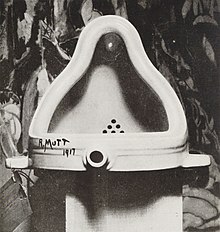
This unusual movement began in the 1960s and impacted art in all forms. Marcel Duchamp, a French artist, paved the way for other conceptual painters and photographers by providing examples and new ideas of already made objects and combining them together. Duchamp's most famous piece "The Fountain" (1917), was a standard urinal-basin that he tried to make reflect a type of fountain. Later on in 1969, Joseph Kosuth acknowledged in his essay Duchamp's relevance and theoretical importance of future conceptual artists:
Art after Philosophy - J. Kosuth
"All art (after Duchamp) is conceptual (in nature) because art only exists conceptually".
All artists in this movement meshed together everyday objects to create new ones, even if the new item did not exist in reality. The concepts behind each idea all emphasized Duchamp's values and reduced the material presence within their works. Some other conceptual pieces include:

Concept Art Video

Questions:
1) Who is the artist that started this unusual movement and how did his ideas change the way people created their artwork?
Marcel Duchamp is the artist who paved the way for all concept artist. His visions of mixing everyday objects impacted the ways in which people began to create their pictures, whether it was photographs or paintings.
2) What was Joseph Kosuth's essay called that he based off of Duchamp's ideas?
a- Philosophy before Art
b- Unique Art
c- Art and Philosophy
d- Art after Philosophy
"Conceptual Art Movement, Artists and Major Works." The Art Story. N.p., n.d. Web. 21 Feb. 2016. <http://www.theartstory.org/movement-conceptual-art.htm>.
"Conceptual Art." Wikipedia. Wikimedia Foundation, n.d. Web. 21 Feb. 2016. <https://en.wikipedia.org/wiki/Conceptual_art>.
Neo-Classicism Art
In 1789, France was on the brink of its first revolution and the Neoclassicists wanted to express a rationality and seriousness that was fitting for their time. Neo-Classicism began in the Mid-18th Century to Early-19th Century. Neoclassicists looked back to the French painter Nicolas Poussin for their inspiration. Neo-classicism was a child of the Age of Reason, when philosophers believed that we would be able to control our destinies by learning from and following the laws of nature. Therefore, Neoclassicism continued the connection to the Classical tradition; and “neo” means “new,” or in the case of art, an existing style reiterated with a new twist. A few neo-classicist artists were Jean- Francois de Troy, Giovanni Paolo Pannini, Jacques-Louis David and Jean Restate. The Neo-classicists, such as Jacques-Louis David, preferred the well-delineated form—clear drawing and modelling (shading). Drawing was considered more important than painting. The Neoclassical surface had to look perfectly smooth—no evidence of brush-strokes should be discernible to the naked eye. Artists like David supported the rebels through an art that asked for clear-headed thinking, self-sacrifice to the State and an austerity reminiscent of Republican Rome. Neoclassicism is characterized by clarity of form, sober colours, shallow space, strong horizontal and verticals that render that subject matter timeless.

 |
| Jacques-Louis David, 1784 (salon of 1785) oil on canvas |


Short Answer:
1. What was the Neoclassicism techniques of painting?
The Neoclassical surface had to look perfectly smooth—no evidence of brush-strokes should be discernible to the naked eye. Drawing was considered more important than painting.
Multiple Choice:
1. Which Neoclassicist supported the rebels through an art that asked for clear-headed thinking and self-sacrifice to the State?
a) Giovanni Paolo Pannini
b) Jean- Francois de Troy
c) Jacques-Louis David
d) Jean Restate
Works Cited:
"Artists by Movement: Neoclassical Art." Artcyclopedia. N.p., n.d. Web. 21 Feb. 2016. <http://www.artcyclopedia.com/history/neoclassicism.html>.
"Neoclassicism, an Introduction." KhanAcademy. KhanAcademy, 2016. Web. 21 Feb. 2016. <https://www.khanacademy.org/humanities/monarchy-enlightenment/neo-classicism/a/neoclassicism-an-introduction>.
Sunday, 14 February 2016
Impressionism Art

- a 19th-century art movement that began in the 1860s to the 1890s created by Claude Monet
- the name of the movement is derived from the title of a work, which provoked the critic to coin the term in describing Monet's work - that the paintings were “impressions” rather than finished works
- this movement began with Manet in 1860, against an old and dusty workshop painting art with established conventions that had become too restrictive for modern time, in order to have their new realistic way of painting recognized
- the works attempted to capture the effects of time and light on their subject matter, and used the painting techniques of applying short rapid brush strokes leaving dabs or spots of colour on the canvas
- the colours the artists used were usually pure or right out of the tube and were often not mixed on the canvas or the palette before application
 |
| Woman with a Parasol - Madame Monet and Her Son Claude Monte, 1875 National Gallery of Art |
- Manet's formula : "I paint what I see, and not what others like to see", summarizes this claim of the artist to give his personal vision , that of his own subjectivity.
 |
Beach at Sainte-Adresse
Claude Monte, 1867
Art Institute of Chicago
|


Works Cited:
- Impressionism and Impressionist Movement. N.p., 2014. Web. 14 Feb. 2016. <http://www.impressionniste.net/impressionism_history.htm>.
- "Impressionism." The Burlington Magazine 133.1057 (1991): 275. Web. 14 Feb. 2016. <http://schools.bgcdsb.org/%7Esean_arnett/01_Impressionism_Art.pdf>.
Thursday, 4 February 2016
Midnight Dance
 |
| Water Colours |
Midnight Dance, this drawing is a silhouette of a ballerina dancing in the midnight. Everyone has their own passion and in my drawing it shows as though the girl’s passion is to dance ballet. The material I used to conduct this drawing is water colour, I used the colours blue, purple, and black to conduct a silhouette of the dancer, dancing in the moonlight. I was inspired by a photo of a man doing yoga in the night sky. (123rf. N.p., n.d. Web. 8 Feb. 2016. <http://www.123rf.com/photo_23339626_man-silhouette-doing-yoga-in-old-temple-at-full-moon-night-sky-background.html>.) Oddly enough, I had thought that the photo was a dance position and it had inspired me to paint a ballerina.
 |
| Pastel Colours |
My picture represents emotionalism to me since I feel as though the photo of the ballerina shows a great amount of emotion because of her shape and structure in the picture. I thought the ballerina looking down at the ground in the darkness was very beautiful and artistic. I also used the dark colours to bring out the look of the ballerina's emotion of sadness as she looks down in the moonlight. I feel that her arms curved the way they do show that she is about to dance a slow elegant ballet dance. Lastly as she is dancing in the darkness, under the moon light it shows as though she doesn't want anyone to see her emotions so she dances late at night. I feel as this relates to our society and how everyone has their own ways of showing their emotions, whether its with loud music, sad calming music, drawing or even dancing to clear your head fro all emotions.
Subscribe to:
Posts (Atom)